
Most people start thinking seriously about insurance when something changes.
A medical diagnosis.
A growing family.
A new financial responsibility.
Or the realization that someone depends on their income.
The problem is that insurance is usually easiest to arrange before those risks become immediate.
That is where the idea of anti-selection, also called adverse selection, becomes important.
Why Insurance Companies Ask About Your Health
Insurance works because people apply while there is uncertainty about what may happen in the future.
That is why insurers normally ask questions about things such as:
- age,
- health,
- medical history,
- lifestyle, and
- other factors relevant to the coverage being applied for.
The insurer uses this information to decide whether coverage can be offered and on what terms.
Anti-selection happens when people are more likely to seek insurance after they already know their risk has increased.
For example, someone who has just discovered a serious health problem may suddenly realize how valuable critical illness or life insurance could be.
But by then, getting the same coverage may become harder.
Depending on the application and underwriting, the insurer may impose different terms, exclude certain risks, charge a higher premium, postpone the application, or decline coverage.
That is why insurance planning should happen before the need becomes urgent.
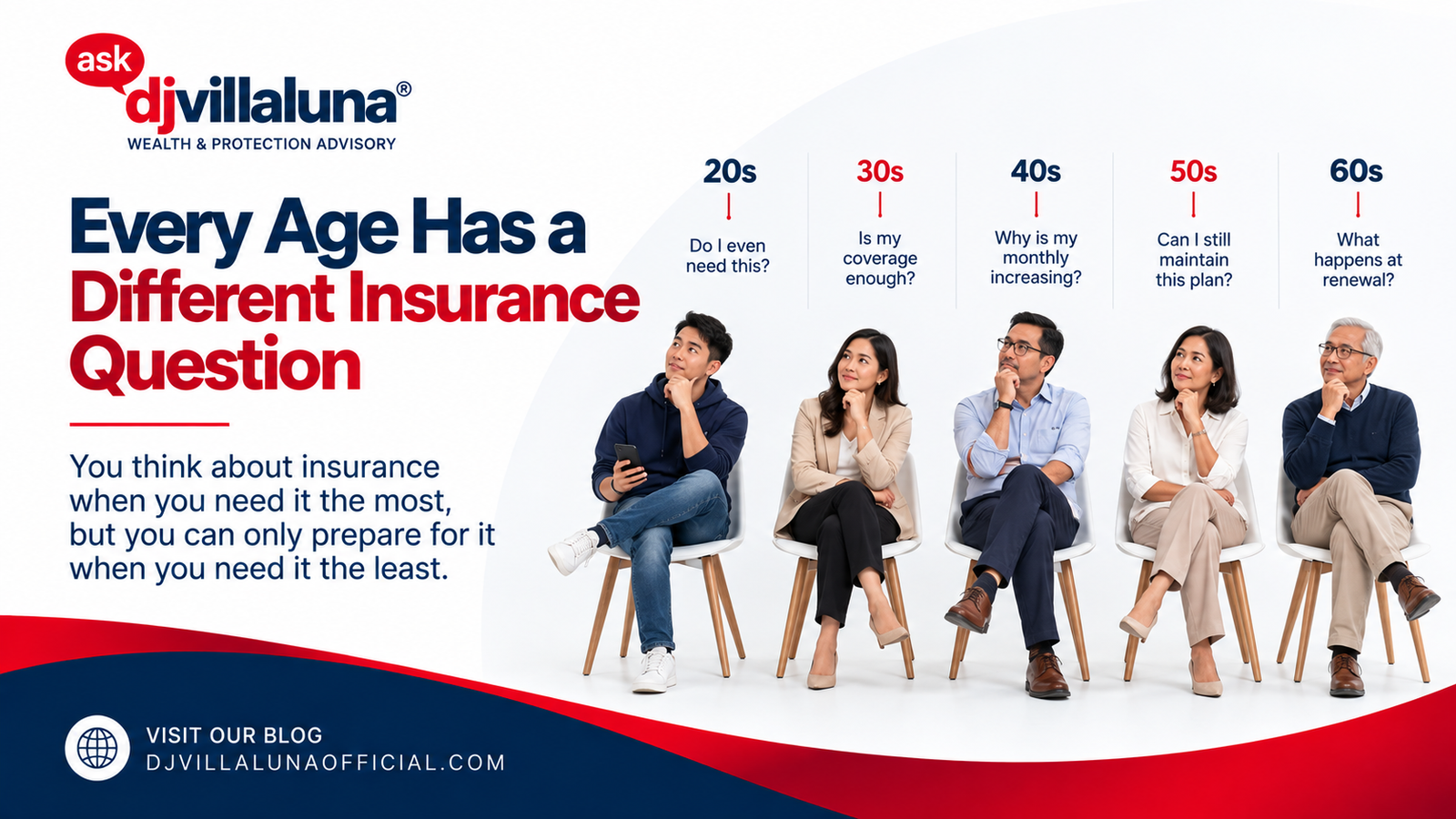
Every Age Has a Different Insurance Question
In your 20s, the question may be:
“Do I even need insurance yet?”
In your 30s:
“Do I have enough protection for my family?”
In your 40s:
“Why is insurance getting more expensive?”
In your 50s:
“Can I still get or maintain the coverage I need?”
And later:
“What happens when my current plan ends or renews?”
The questions change because your responsibilities, health, age, and financial situation change.
But one principle remains:
The best time to prepare is usually when you still have more options.
You Buy Insurance When You Need It the Least
That sounds strange, but it is one of the most important ideas in protection planning.
When you are young, healthy, and earning, insurance can feel unnecessary.
You may think:
“I’m okay. I’ll deal with that later.”
But those are often the years when you have the greatest opportunity to establish protection.
You are not buying insurance because you expect something bad to happen tomorrow.
You are preparing because you do not know what may happen years from now.
Waiting Can Change Your Options
Insurance is different from ordinary purchases.
If you want a new phone next year, you can probably still buy one.
If you want insurance next year, however, the terms available to you may depend on what happened to your health during that year.
That is why waiting is not always neutral.
Your income may improve.
But your insurability may not.
The longer you wait, the more chance there is that age, health, or other changes may affect the options available to you.
Insurance Is About Preparing While You Still Can
The goal is not to buy every possible policy as early as possible.
The goal is to understand what risks you already carry.
Ask yourself:
Who depends on my income?
What happens financially if I become seriously ill?
Would my savings survive a long recovery period?
What protection would become harder to get if my health changed tomorrow?
Those are better questions than simply asking:
“Do I need insurance today?”
Because insurance is not only about today’s situation.
It is about protecting tomorrow’s options.
The Takeaway
People often think about insurance when they need it most.
But insurance is usually something you set up when you need it least.
While you are healthy.
While you are working.
While you still have choices.
That is why starting early matters.
Not because something bad is guaranteed to happen.
But because the ability to prepare may not always stay the same.
You cannot always control when you will need insurance.
But you can control whether you prepared before that day comes.
For more practical financial and protection planning, visit https://djvillalunaofficial.com/.
This article is for general financial and insurance education only. Approval, premiums, exclusions, underwriting decisions, and available benefits depend on the specific insurance product, application, health information, and insurer assessment.
Leave a Reply