
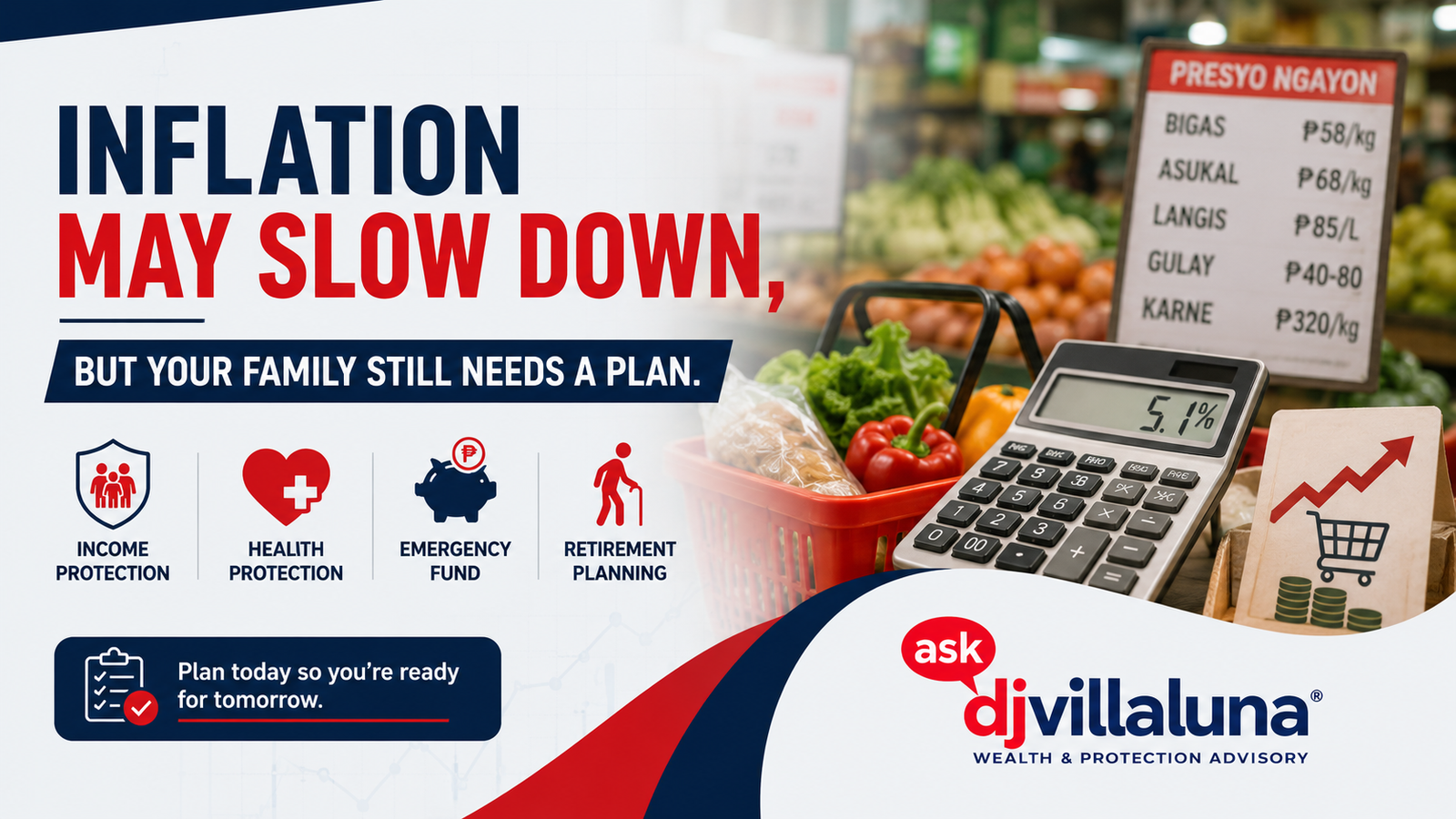
According to a recent report from the Philippine Daily Inquirer, the 2026 Philippine inflation forecast was cut to 5.1%, partly due to easing global oil prices. This sounds like good news because lower inflation can reduce pressure on prices. But the same report also noted that underlying price pressures remain persistent, which means many Filipino families may still feel the cost of living rising even when forecasts improve.
For ordinary workers, breadwinners, parents, and OFWs, inflation is not just an economic number. It is something they feel every time they buy groceries, pay electricity, send money home, pay tuition, or prepare for medical expenses.
A lower inflation forecast does not mean prices will go back to where they were before. It usually means prices may increase at a slower pace. So if your family expenses were already high, they may still continue to rise.
This matters because many Filipino families plan based only on today’s income. But if expenses keep rising, the money that feels enough today may not be enough in the future.
For example, if your family needs ₱50,000 per month today, and prices increase by around 5.1% per year, the same lifestyle may cost about:
₱64,000 per month after 5 years
₱82,000 per month after 10 years
₱134,000 per month after 20 years
That is the silent effect of inflation. It does not always shock you in one day, but it slowly reduces the value of your money over time.
As a financial protection advisor, my take is simple: Filipino families should not only ask, “Kaya ba namin ngayon?” They should also ask, “Kakayanin pa ba namin in the next 5, 10, or 20 years?”
This is why financial planning matters.
An emergency fund helps you handle sudden expenses.
Health protection helps reduce the impact of medical costs.
Life insurance helps protect your family if income suddenly stops.
Retirement planning helps you prepare for the time when you no longer want to work.
Income protection helps make sure your family has support even when life does not go as planned.
Insurance does not solve everything. It will not stop inflation, illness, job loss, or emergencies. But it can be part of a bigger financial plan that helps protect your family from being forced to start from zero when problems happen.
The important step is to measure your gap.
How much does your family need every month?
How long can your savings support you?
Do you have protection if income stops?
Do you have a plan for medical emergencies?
Are you preparing enough for retirement?
Inflation reminds us that money needs a plan. If expenses can grow, then our savings, protection, and retirement planning should grow too.
Before buying any plan, start by understanding your current situation.
Take the Financial Protection Assessment and check which area of your financial life may need attention first.
Leave a Reply