
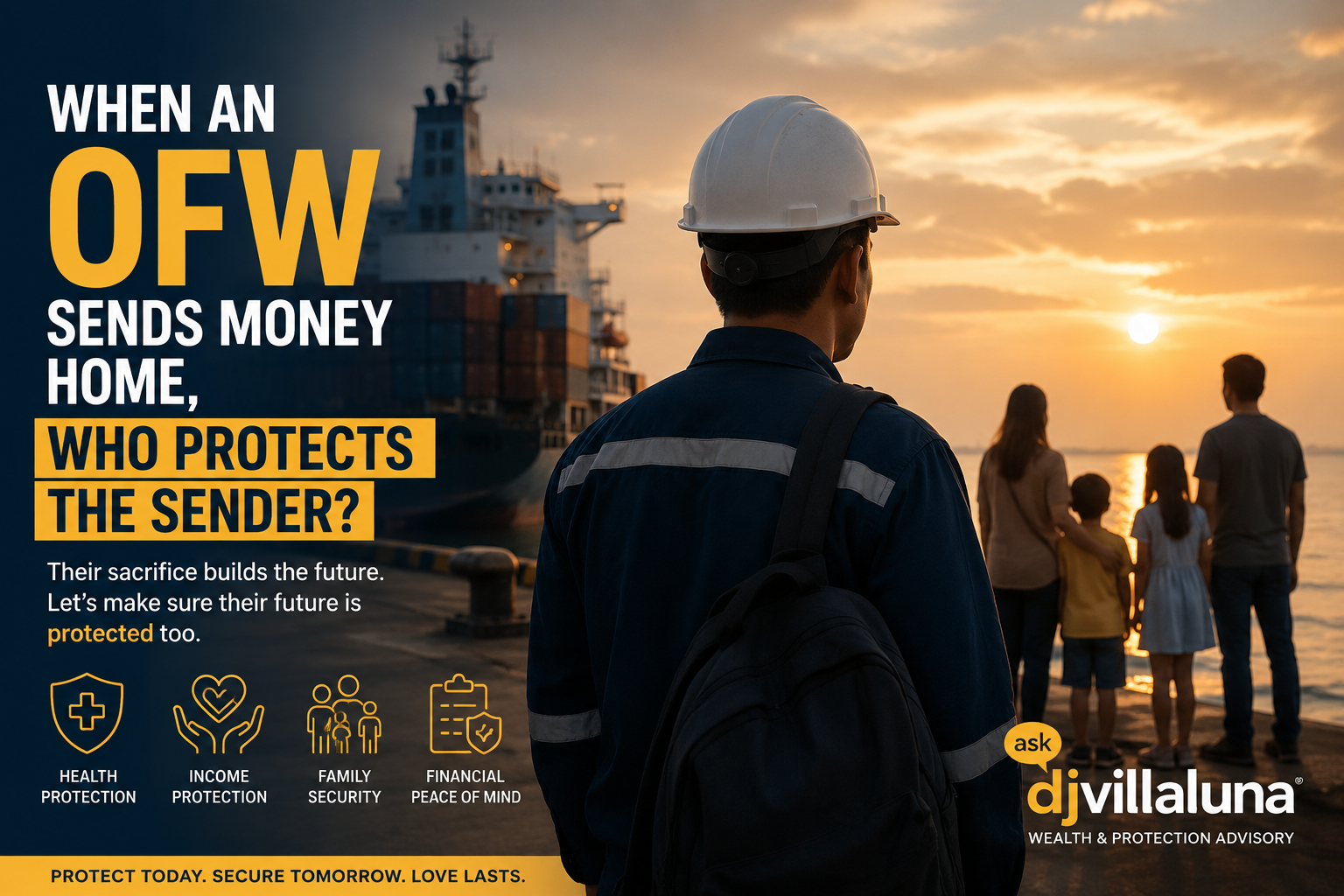
Many Filipino families survive because of one person working far from home.
An OFW leaves the country to provide. A seafarer spends months away from his family. A parent works abroad so the children can study, the house can be paid, the bills can be covered, and the family can live with more comfort.
Every month, money is sent home.
For food.
For tuition.
For rent.
For medicine.
For debts.
For family needs.
But here is one question many families forget to ask:
When an OFW sends money home, who protects the sender?
Many OFWs are focused on protecting their families financially, but they are not always protected themselves.
Some have medical coverage while they are abroad. Some seafarers may have health or work-related benefits while they are under contract. Some companies may provide access to medical care while the worker is actively employed overseas.
But what happens when they come home?
For many OFWs and seafarers, their medical benefits are only active while they are working abroad, while they are under contract, or while they are connected to their employer. Once they return to the Philippines, change employer, stop working, or take a break, the coverage may no longer be the same.
That is where the risk begins.
Because sickness does not only happen while someone is abroad. Accidents do not only happen during work. Critical illness does not wait until a contract is active.
A serious illness can happen while the OFW is home on vacation. A medical emergency can happen while waiting for the next deployment. A seafarer can come home, rest for a few months, and suddenly face a health problem without enough personal protection.
And when the sender gets sick, the whole family can be affected.
The income may stop.
The remittance may stop.
The savings may be used up.
The family may need to borrow money.
The person who used to send help may now become the one who needs help.
This is why OFWs should not only think about sending money home. They should also think about protecting themselves.
A complete financial plan should include personal protection such as life insurance, critical illness coverage, accident protection, disability protection, and healthcare planning depending on the person’s needs, budget, age, and health condition.
This does not mean every OFW needs the same plan.
A single OFW supporting parents may need a different plan from a seafarer with children. A married OFW with loans may need a different protection strategy from someone who is just starting to build savings.
The important thing is to know the gap.
How much protection do you currently have?
Is your coverage active only while you are abroad?
What happens when you come home?
Who will pay if you get seriously sick?
How long can your family survive if the remittance stops?
Before choosing a plan, start with an assessment.
Use the Financial Protection Assessment Tool to check your current situation, responsibilities, possible risks, and protection needs. This can help you understand what kind of coverage may fit you before booking a call or applying for any plan.
OFWs protect their families through sacrifice.
But the sender also deserves protection.
Leave a Reply